By Joseph Batory (Published in the Center City Concerned Citizens Review, June 2024, Philadelphia, PA)
The efforts by national organizations and media outlets to issue annual lists of “the best high schools in the USA ” are naive at best.
Sadly, such evaluations are essentially treating all schools as if they were factories with uniform “student widgets” rolling down each school’s assembly lines.
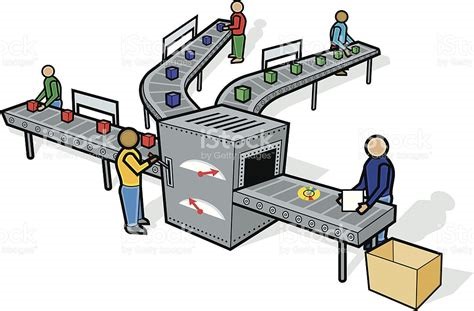
The premise is that these “best schools” just pour “magic learning potions” into the pupil heads and most of the students come out perfectly. Standardized test results of students and/or numbers of pupils headed for college then validate and publicly proclaim which high schools are the best ones. And not surprisingly, high schools across America which serve homogeneous student bodies from the most affluent upper classes or select their pupils almost always get the top ratings.
However, America’s young people are hardly uniform widgets. Most USA schools have tremendously heterogeneous student bodies bringing enormous challenges with a myriad of student abilities and needs. In addition, educational resources vary widely from school to school across our nation.
Student socioeconomic backgrounds, poverty levels and racial and ethnic differences, as well as the mobility of the population (transfers in and out) create massive challenges for schools academically. Additionally, many high schools also have large numbers of pupil newcomers initially in need of help with learning English as well as many special needs pupils. Many of the students in these schools struggle with standardized tests. Their academic development often takes time. BUT schools addressing such diversity and student needs are too often underrated.
In summary, it’s best to ignore those published evaluations of schools which use test scores and/or numbers of college admissions, to make definitive judgments. These “best schools” might certainly be doing well with their homogeneous groups of students. BUT THAT IS PREDICTABLE AND HARDLY SURPRISING!
The bottom line is that using a barometer of using standardized student test results to compare and ultimately rate the quality of any school is nonsensical. This fallacy ignores the reality of the complex challenges of many schools with diverse and more challenging student populations .
Amerca’s schools are not filled with perfectly made student widgets progressing along uniform pathways. Across our nation, many schools are terribly unequal in terms of the heterogeneity of the pupils they serve and the educational resources they have. What many of such schools do and accomplish very well with young people cannot be simplistically measured and certainly not by standardized methodologies.
___________________________________________________________________
When he retired as the superintendent of schools in nearby Upper Darby, Joseph Batory received the Lifetime Achievement Award from the American Association of School Administrators and was honored by the President of the United States.
 joebatorycom/josephbatory.net