
Published nationally in the School Administrator Magazine January 2022
By Joseph Batory
When I finished high school in June of 1960, as someone off the streets of Philadelphia, I saw two future choices.
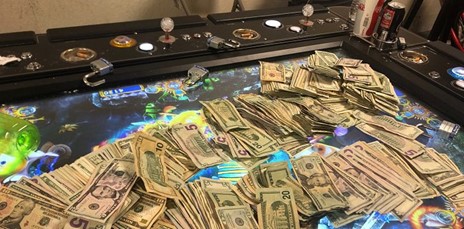
My top option was to pursue a blue-collar job along side my father at the huge General Electric plant located in my Southwest Philadelphia neighborhood. And this would allow me to make some serious money on the side working for the Illegal Gambling Operation in my neighborhood under the direction of Guido, the local “wise guy” boss.
My second and least favored possibility was to attend Philadelphia’s LaSalle College (not then a university), which had surprisingly accepted me for admission beginning in September.
College? Are You Kidding?
However, my planning was soon derailed. The Mafia boss Guido authoritatively reduced my wish list by demanding that I go to college: “For heaven’s sake Joey, you’re one of the first around here to ever get admitted to prestigious college like LaSalle, so why would you throw away that opportunity?” Guido argued. “Besides, you’ll be a representative from us people in the real world! You didn’t have no silver spoons growing up so you could be a role model. You could inspire kids from this neighborhood to reach upward. And what a difference you could make as a teacher or a principal for kids who grew up like you did. So, forget about running numbers.”
Guido was determined. He stopped by my house on a steamy summer night and insisted that I fill out my acceptance confirmation agreement from LaSalle in front of my mom and dad. The packet was put in the mail. The three adults were jubilant. I was depressed and felt like I was trapped on a shaky tree limb.
A few weeks later, I paid my first semester LaSalle tuition, an awesome amount for someone from my social class ($300.00), picked up my roster, and navigated my way to the five first semester scheduled classes. On the bright side, LaSalle’s professors were friendly, classes were small, and teaching involved much “give and take” between students and profs. And I was struck by the manners of classmates. Shockingly, people said hello and nodded to you like you were an equal. That was the good news!
The bad news had to do with textbooks. In my first 12 years of schooling, books on different subjects in my Catholic high schools were given to all students free of charge and then returned to school authorities at the year’s end. BUT…to my amazement, I had no idea that in college, you had to buy your own books!!!
I had carefully budgeted the precise amount of tuition money for the first year of the LaSalle tuition. But there was no money left to buy books that first year. My professors had mandated eight different textbooks. I was doomed. The textbook costs were somewhere around $60.00, an awesome amount at that time for someone who worried about thirty cents of his public transit money back-and-forth to LaSalle each day.
And so, it came to pass that I did not purchase even one new book during my first two semesters at LaSalle College. Most of the time, with much embarrassment, I borrowed the precious textbooks from willing LaSalle students and read rapid fire with desperation when classmate friends ate lunch in the cafeteria or sat around the campus at leisure.
In my subsequent years at LaSalle, summer jobs and some minor funding from Guido solved my textbook problems, but the first year at LaSalle without the required texts had been a nightmare.
During my first two years at LaSalle, most of the clothes I owned were old, frayed/torn and poorly fitted. But my resourceful mother had a funeral director friend. Did you ever wonder what happened to the clothes from a dead person when the body is taken to the mortuary? Well, most families just tell the funeral director to discard the clothes of the deceased. But my determined mother knew I needed some better clothes for college. She pleaded with her funeral-director friend and was often able to acquire clothes from the recently deceased for me to wear. So, during my early La Salle years, I was often clothed in a wardrobe from dead people. And most of these clothes were nowhere close to a good fit for me nor were they in “in style.” And my lower-class social background and shabby clothing made me feel like an alien from another planet.
No way of course could I afford to live on campus. I rode public transit to and from LaSalle each day and usually travelled with only two necessary transit fares and no additional money.
Worse yet, the bottom line was that the academic challenges of college were formidable if not overwhelming for me with or without books.
Thankfully, Guido was always there for me. On the congested streets of my Philly neighborhood, he constantly encouraged me during my four-year LaSalle struggles, picking me up when I was down and always offering positive reinforcement.
Discovering A Passion
Finally, after more than a year of being lost in the meaningless pathways of college subjects, I found refuge in a superbly taught English novel course (Dr. Howard Hannum) at LaSalle. The classic literature we read featured social class discrimination, hatred, revenge, betrayal, power struggles, violence, and deception, sort of like growing up in my neighborhood. I had found relevance at last. I became a real student for the first time in my life as an English major!
To LaSalle’s credit, it was the only institution of higher learning that dared to admit me into academia, something several other Philadelphia area colleges refused to do. Indeed, my eventual degree is a miracle the Vatican should perhaps investigate.
Mentoring Matters Greatly

And then of course there was the irrepressible Guido. In simplest terms, without the relentless encouragement and support from my unusual mentor, college for me probably would never have happened.
And it was a debt I promised to pay back in the future. I vowed to make a difference as Guido had suggested for those in need via my career in education.
The bottom line is that mentoring matters monumentally, especially for those young people who need support the most. The empathy, motivation, and guidance for me from a very unlikely source coupled with LaSalle’s acceptance of me as a student changed the course of my life.
From his roots in poverty, Joseph Batory rose to become the superintendent of schools in one of Pennsylvania’s largest school systems, Upper Darby, PA (1984-1999). By the time Joe retired, he had received numerous national awards and honors for his educational leadership and was even honored by the President of the United States and the United States House of Representatives. Over the past three decades, he has awarded individual scholarship assistance to 42 Upper Darby High School grads.
The article above is adapted from his third book, Joey Lets it All Hang Out, published by Rowman and Littlefield, Lanham, MD, and Oxford, UK, 2003.
 joebatorycom/josephbatory.net