When you’re poor, you know it and escaping poverty is not easy!!!!!!!!
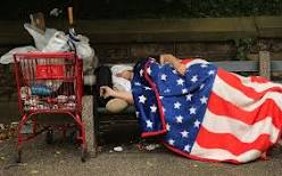
- It is tragic that 70+ years beyond my days of growing up poor in Philadelphia, that the latest U.S. Census has revealed that 43 million Americans still live in poverty. It is much too easy for each of us to ignore those less fortunate. And too many of us characterize the poor as lazy or without goals or aspirations. But the causes of poverty – being born into a poor family, the loss of employment, inadequate education, substance abuse, influences of adverse reality (neighborhood violence and crime), and mental problems (many war vets) are not obstacles easily overcome.
It has always bothered me when someone at a social gathering utters the usual overused cliche: “My family was poor, but we never knew it.” Usually, I just don’t respond. But I know that the statement is ridiculous. That’s because when you are truly poor, you know it! Being poor is something that you are deeply aware of because being poor is often painful and humiliating. It is not something you forget. And escape from poverty is not easily accomplished.
By the accident of birth, my household was far from affluent. As a teenager, most of the clothes I owned were old, frayed and often torn or with holes in them. Fortunately, my mother had a funeral director friend. Did you ever wonder what happened to the clothes off a dead person when the body is taken to the mortuary? Well, most families just tell the funeral director to discard the clothes of the deceased. But my resourceful mother was not about to let this happen. My mother pleaded with her funeral director friend and was often able to acquire the dead person’s clothes for me to wear. I ended up with a wardrobe from dead people even though most these clothes were nowhere close to a good fit for me or “in style.” Lots of people smirked at me and made fun of how I was dressed as a teenager. I was very aware that I was poor, and I hated it.
In the Philadelphia neighborhood where I grew up, most of my neighbors were also poor. When I was 9 years old, a friend invited me to dinner. This was an unprecedented experience, and I was very excited. At my friend’s dinner table, I was seated with the 10 children in this family. The mother came in and put two bottles of ketchup, two jars of mayonnaise, and two bowls of sugar on the table. She then tossed two loaves of sliced white bread on the table. Everyone then dived in and made a couple of ketchup, mayonnaise, or sugar sandwiches. I did not go home hungry after this “dinner experience” …but I knew I was poor.
After high school, I thought I would just follow my father into the factory where he worked for decades. I had little interest in attending college, a foreign idea which I resisted.
But my mother and father had other ideas. My father did not earn much money at the GE factory where he worked. But he did get a $25 U.S. Savings Bond with every other paycheck. These accumulated savings bonds coupled with a few part-time jobs eventually accumulated my first-year college tuition at La Salle College (a whopping $600, which, believe it or not, was high in 1960).
So, when I reluctantly started college, I had $600 for the first two semesters in hand. But no one told me that there would be additional costs for books. No way I could purchase these required texts. So as a freshman, I begged and borrowed textbooks from other students randomly during the day and as frequently as possible. It was humiliating. But I survived my first year at La Salle College academically without ever owning any of the required textbooks for six courses. Besides, the college subject matter was a peculiar artificiality which had little connection to my life. I struggled mightily. I was very aware that I was poor, and I hated it.
I rode trolleys and the subway to La Salle every day, often with no money and only two transit tokens in my pockets. I was always terrified that I would lose one of my transit tokens and then have to walk many miles home. I often “brown bagged” lunch, another embarrassing experience because I never saw another La Salle student with a brown bag lunch in four years. I knew I was poor!
Somehow, with very limited financial resources, I made it into my senior year at La Salle as an education major. The culmination of this program was a field experience as a “student teacher.” By this time, I owned one pair of black dress pants, but the seat of the pants had worn out … I put black tape on the inside of the hole in my pants to make the necessary repair. A musician friend of mine gave me one of his performance suit jackets, but the problem was that he was very tall and this very nice “hand-me-down” suit coat went down to my knees. Finally, my mother acquired a dress shirt from her undertaker friend, but it was two-toned and completely out of style. My attire as a student teacher was embarrassingly absurd. I felt deeply sorry for myself as I met my first group of students in an inner-city school. However, these kids were poorer than me and they actually thought I was well dressed! I got compliments from the kids as being a “sharp dresser.” A little life lesson for me there!
Converse All-Star sneakers were the rage for teenage athletes in the 1960’s. But a pair cost an unaffordable $9.95. So, I traveled to St. Joseph’s College (not then a university) and rooted through the trash bins outside the athletic complex. I was able to find some “tossed” heavily used Converse sneaks probably discarded by basketball players who got new ones. These sneakers were like gold to me, sometimes 2-3 sizes too big, but did I care? On hardwood and concrete basketball courts, the soles of the sneakers wore out quickly, so I put cardboard inside to block the holes. Sometimes the balls of my feet were incredibly painful after jumping around in basketball games with no support from the bottoms of these sneakers. But I was happy to be wearing Converse All-Stars. And I also knew I was poor!
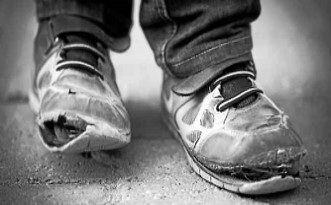
- In summary, being poor is a terrible and lasting experience. There is no easy way to escape from poverty, and most do not. My escape from poverty had little to do with my goals or ambition, but rather it came from the influence of others.
- Ironically, each of the world’s religions focuses on the “responsibility of truly religious people” to care for the poor. As individuals, we can do better in reaching out to the unfortunate!
- The poor of our nation also need compassion and better support from our government. In the words of Confucius: “In a country well governed, poverty is something to be ashamed of.” Our nation has too much poverty. America can do better!
____________________
Joseph Batory, who grew up in poverty in Philadelphia, became the award-winning superintendent of schools in the Upper Darby School District (1984-1999). He has awarded scholarship assistance to a worthy and needy Upper Darby High School grad in each year of the past three decades.

